There's that heart-sinking moment every cook knows too well: you're whisking away at a sauce, watching it come together into a beautiful, glossy emulsion, when suddenly—it breaks. The silky smoothness gives way to a grainy, oily mess that seems beyond repair. Before you even think about pouring it down the drain, take a deep breath. A broken sauce is not a lost cause. In fact, with a few simple techniques and an understanding of why emulsions fail, you can almost always bring it back from the brink.
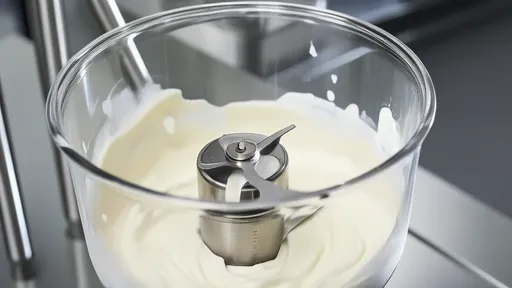
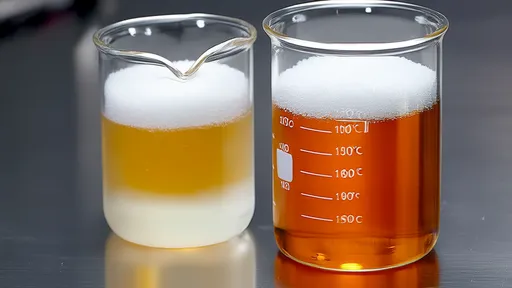
At its core, an emulsion is a stable mixture of two liquids that normally don't want to mix—typically, oil and water. Think of a classic vinaigrette. Left alone, the oil will float to the top. But when you shake it vigorously, you force the oil to break into tiny droplets that suspend throughout the water-based component (like vinegar or lemon juice), creating a temporarily unified sauce. Hollandaise, mayonnaise, and beurre blanc are all more complex, permanent versions of this principle. They break because that delicate suspension collapses. The droplets of fat coalesce and separate out, leaving you with a curdled-looking disaster. The reasons for this are usually tied to temperature shock, adding the fat too quickly, or simply not having enough emulsifying agents to hold everything together.
The first and most critical rule of sauce rescue is don't panic and don't throw it away. The second rule is to act quickly. A broken warm sauce will continue to deteriorate as it sits. The third, and perhaps most important rule, is to start over slowly. You don't fix a broken emulsion by whisking the broken mess frantically. The most reliable method is to start with a new, stable base. For a mayonnaise or hollandaise that means using a fresh egg yolk. Put a tablespoon of lemon juice or water (for mayo) or a tablespoon of water (for hollandaise) in a clean, room-temperature bowl. Add that fresh yolk and whisk it until it's frothy. This is your brand-new foundation, rich with lecithin, a powerful emulsifier that will gladly grab onto the fat molecules and bring them back into the fold.
Now, the key is to slowly reintroduce the broken sauce to this new base. Imagine you're making the sauce for the very first time. Take your broken, separated sauce and, drip by painstaking drip, whisk it into the fresh yolk base. You must be patient. Whisk constantly and vigorously to ensure each microscopic droplet of fat is thoroughly incorporated before adding the next. As you see the emulsion beginning to take hold and thicken beautifully in the bowl, you can very gradually increase the stream of broken sauce to a thin, steady trickle. This method essentially treats your failed sauce as if it were the pure oil or butter you started with, and the fresh yolk provides the emulsifying power to bind it all back together.
But what if your sauce broke due to heat, like a hollandaise or beurre blanc that got too hot? Temperature control is everything here. If your rescue base is too cold and your broken sauce is too hot, the thermal shock will just break your new emulsion instantly. Let your broken sauce cool down slightly off the heat. You can even place the bowl of your new yolk base inside a larger bowl of warm (not hot) water to gently take the chill off. You want the temperatures to be friendly, not antagonistic. Whisking in the cooled broken sauce slowly into the slightly warmed base allows the emulsion to form without stress.
Not every broken sauce requires a whole new egg yolk. Sometimes, a broken vinaigrette or a slightly split pan sauce just needs a little help from another emulsifier. This is where a teaspoon of Dijon mustard, a tablespoon of cream, or even a pinch of starch can work miracles. Mustard contains its own natural emulsifiers. If your vinaigrette has separated, put a teaspoon of Dijon in a clean bowl and, whisking constantly, very slowly drizzle in the broken vinaigrette. The mustard will help stabilize the oil and vinegar once again. For a creamy pan sauce that's just beginning to look a bit greasy, a splash of heavy cream can often rebind the fats. Whisk it in off the heat. A slurry of cornstarch and water can also thicken and stabilize a sauce, though it will change the texture to be more gravy-like.
The ultimate goal, of course, is to prevent the break in the first place. Prevention is always easier than the cure. For mayonnaise and hollandaise, all your ingredients should be at room temperature to encourage easy emulsification. When adding your oil or melted butter, do so at a snail's pace at the beginning. The initial droplets are what build the structure of the emulsion. Once that structure is solid, you can add the fat a bit more quickly. For hot butter sauces like beurre blanc, maintain a very low heat—just enough to keep the sauce warm, not so hot that it simmers and breaks. And always use a stable, heavy-bottomed bowl or pot that will distribute heat evenly, preventing hot spots that can shock the sauce.
A broken sauce can feel like a professional failure, but it's really just a lesson in food science. Every great chef has broken more sauces than they can count; what separates them is the knowledge of how to fix it. It teaches patience, the importance of technique over speed, and a deeper respect for the ingredients and reactions at play in your kitchen. So next time you see those dreaded pools of oil forming, see it not as a disaster, but as an opportunity to learn, to adapt, and to master one of the most satisfying tricks in a cook's repertoire. With a calm hand and a steady whisk, smoothness is always within reach.
By /Aug 29, 2025

By /Aug 29, 2025
By /Aug 29, 2025
By /Aug 29, 2025
By /Aug 29, 2025
By /Aug 29, 2025
By /Aug 29, 2025
By /Aug 29, 2025
By /Aug 29, 2025
By /Aug 29, 2025

By /Aug 29, 2025
By /Aug 29, 2025
By /Aug 29, 2025
By /Aug 29, 2025
By /Aug 29, 2025

By /Aug 29, 2025
By /Aug 29, 2025

By /Aug 29, 2025
By /Aug 29, 2025

By /Aug 29, 2025
